

Wire Size for Tesla Wall Connector: 48A Load on 60A Breaker
A Tesla Wall Connector set to deliver 48A continuous is not just a simple “plug it in” device. It is a continuous load EV charger governed by NEC 625 and the general branch-circuit rules in NEC 210. That means the breaker, conductors, and terminations must all respect the 125% continuous load rule. In practice, this is why a 48A Tesla Wall Connector ends up on a 60A breaker, and why wire size choices like 6 AWG THHN or 4 AWG NM-B matter.
NEC 125% Rule for Continuous Loads
EV charging equipment like the Tesla Wall Connector is treated as a continuous load under NEC 625.42. A continuous load is one where the maximum current is expected to flow for three hours or more. For these loads, NEC 210.19(A)(1) and 215.2 require branch-circuit and feeder conductors to be sized at not less than 125% of the continuous load, and NEC 210.20(A) requires the overcurrent device to be sized accordingly.
For a Tesla Wall Connector configured to deliver 48A continuous, the math is straightforward: 48A × 1.25 = 60A. This is the origin of the 60A breaker requirement. The breaker must be able to carry the continuous load plus the 25% margin, and the conductors must be sized to carry that same 60A value under the applicable ampacity tables and conditions of use.

Why a 48A Tesla Uses a 60A Breaker
Many installers are surprised the first time they see a 48A Tesla Wall Connector on a 60A breaker. It feels like the breaker is “oversized” compared to the nameplate current. In reality, the breaker is sized to the continuous load requirement, not just the nominal current. The 60A breaker is there to ensure that the device can operate continuously at 48A without nuisance tripping and while staying within the thermal limits of the conductors and terminations.
It is important to remember that the breaker rating is not the same as the continuous operating current. For continuous loads, the breaker is typically loaded to no more than 80% of its rating. In this case, 48A is 80% of 60A, which aligns perfectly with the NEC guidance. This is why you should not attempt to place a 48A continuous EV charger on a 50A breaker—the math and the code do not support it.
Wire Size Options: 6 AWG THHN vs 4 AWG NM-B
Once the 60A breaker is established, the next question is wire size. Under typical conditions, 6 AWG copper THHN in conduit is a common choice. In the 75°C column of NEC Table 310.16, 6 AWG copper THHN is rated for 65A, which covers the 60A design current for the Tesla Wall Connector. This assumes the terminations are rated for 75°C and that adjustment and correction factors do not reduce the ampacity below the required value.
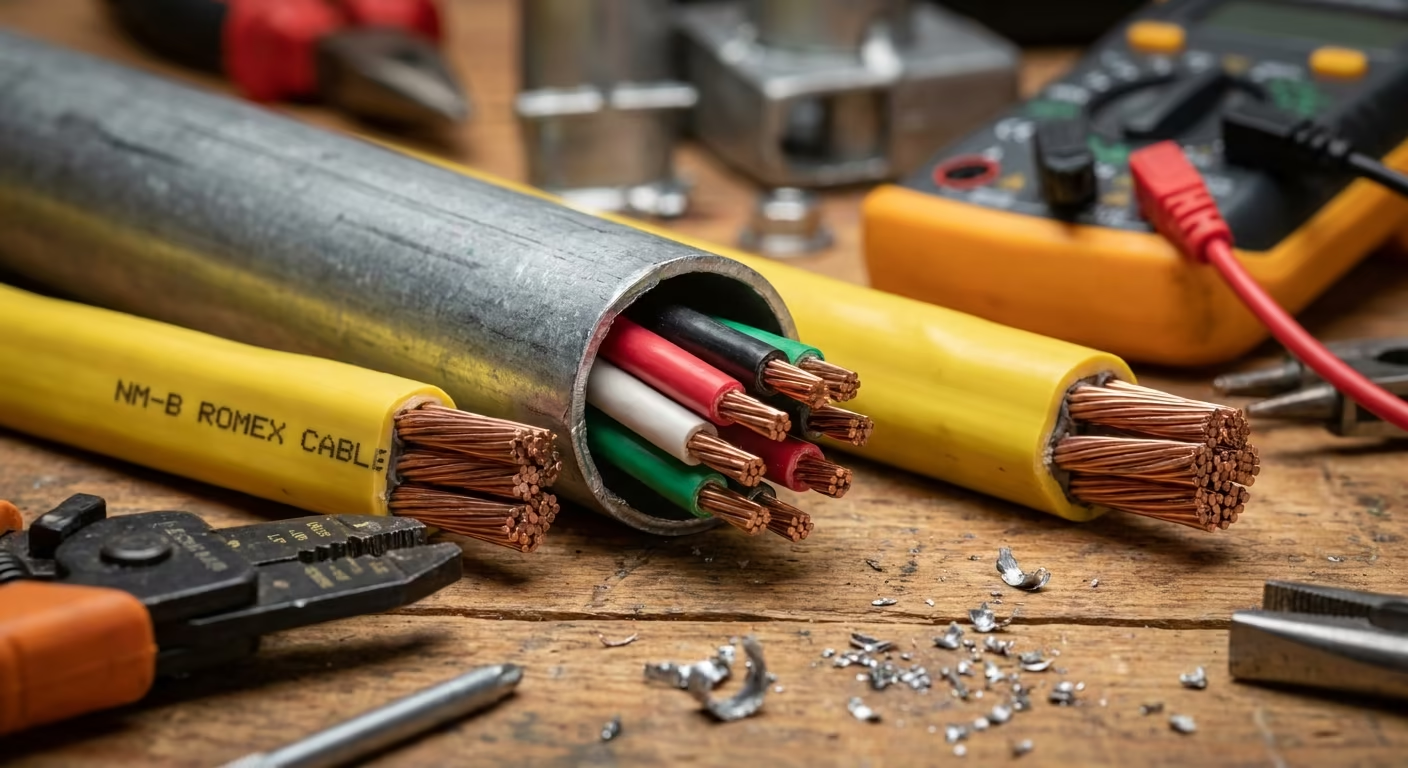
For NM-B cable, the situation is different. NM-B is limited to the 60°C column for ampacity, even if the conductors inside are 90°C rated. In that column, 6 AWG NM-B is typically rated 55A, which is not sufficient for a 60A continuous design current. To meet the 60A requirement with NM-B, you would move up to 4 AWG NM-B, which has a higher ampacity in the 60°C column. This is why you often see guidance like “6 AWG THHN in conduit or 4 AWG NM-B” for a 60A Tesla Wall Connector circuit.
Using WireSizerPro for Tesla Wall Connector
Instead of manually working through ampacity tables, temperature ratings, and continuous load calculations, you can use the WireSizerPro wire size calculator to model a Tesla Wall Connector circuit directly. By entering the load current (48A), breaker size (60A), conductor material, insulation type, and installation method (conduit vs cable), the calculator can suggest appropriate wire sizes that comply with NEC 625 and 310.
This is especially useful when you need to account for longer runs, voltage drop, or derating due to ambient temperature or conduit fill. The calculator can show you when 6 AWG THHN is sufficient, when you might need to move to a larger size, and how 4 AWG NM-B compares in different scenarios. It turns what would be a multi-step manual process into a quick, repeatable check.

To try this yourself, use the primary calculator link below and set the load to 48A, breaker to 60A, and choose copper conductors with THHN insulation in conduit. Then compare the results with a 4 AWG NM-B option to see how the ampacity and installation method affect your design.
FAQ: Tesla Wall Connector Wire Sizing
- Why does a 48A Tesla Wall Connector require a 60A breaker?
- Because EV charging equipment is treated as a continuous load under NEC 625.42. Continuous loads must be sized at 125% of the load current for both conductors and overcurrent devices. For a 48A Tesla Wall Connector, 48A × 1.25 = 60A, which leads directly to a 60A breaker and a 60A design current for conductor sizing.
- Can I use 6 AWG NM-B for a 60A Tesla Wall Connector circuit?
- Typically no. NM-B cable is limited to the 60°C ampacity column, where 6 AWG copper is usually rated 55A. That is below the 60A design current required for a 48A continuous load. To meet the requirement with NM-B, you would move up to 4 AWG NM-B, which has a higher ampacity in the 60°C column.
- Is 6 AWG THHN in conduit acceptable for a 60A Tesla Wall Connector?
- In many cases, yes. In the 75°C column of NEC Table 310.16, 6 AWG copper THHN is rated 65A, which covers the 60A design current. This assumes the terminations are rated for 75°C and that any adjustment or correction factors do not reduce the ampacity below 60A. Always verify conditions of use and equipment ratings.
3D Print & PCB Note
If you are designing custom mounting hardware, cable management, or PCB-based monitoring for a Tesla Wall Connector installation, remember that the electrical design must come first. Wire sizing, breaker selection, and terminations must comply with NEC requirements before you add any mechanical or electronic enhancements. Use WireSizerPro to lock in the electrical side, then design your 3D printed parts or PCBs around a safe, code-compliant circuit.