
6 AWG vs 4 AWG for EV Chargers: NM-B vs THHN Rules
Choosing the correct conductor gauge for an electric vehicle (EV) charging station is one of the most critical safety decisions in residential electrical work. Because Level 2 EV chargers draw maximum current for 6 to 10 hours continuously, they place immense thermal stress on your home’s electrical panel and wiring. The single most common code violation in DIY installations involves a dangerous misunderstanding of 6 AWG copper ampacities under the National Electrical Code (NEC).
Quick Answer:
For standard 32A or 40A Level 2 chargers, 8 AWG or 6 AWG copper wire is sufficient. However, if you are installing a hardwired 48A charging station, NEC regulations mandate a 60-Amp circuit breaker. This requires either 6 AWG THHN/THWN-2 conductors inside conduit or an upsized 4 AWG NM-B (Romex) cable. You legally cannot use 6 AWG Romex for a 48A charger.
Table of Contents
EV Charger Wire Sizer
6 AWG vs 4 AWG Analyzer (NEC 625.40)
1. The NEC 125% Continuous Load Rule Explained
Electric vehicles are strictly classified as a “continuous load” by the National Electrical Code (NEC Article 625.42). By engineering definition, any load drawing maximum current for 3 hours or more is continuous.
Standard residential thermal-magnetic circuit breakers are engineered to trip based on heat accumulation. If you run a breaker at 100% of its capacity for an extended period, it cannot dissipate the generated resistance heat fast enough. To prevent thermal degradation and nuisance trips, the NEC mandates that you size the circuit for 125% of the charger’s actual sustained output.
- 32A Charger Output × 1.25 = 40A Circuit Breaker required
- 40A Charger Output × 1.25 = 50A Circuit Breaker required
- 48A Charger Output × 1.25 = 60A Circuit Breaker required
2. 6 AWG vs 4 AWG Ampacity Ratings (NEC Table 310.16)
Once your breaker size is locked in, you must select a wire capable of handling that current safely. The physical diameter of the copper is only half the equation; the outer insulation jacket dictates how efficiently the wire can shed heat, determining its true ampacity limit.
Nonmetallic sheathed cable (NM-B, commonly known as Romex) features a thick PVC outer jacket over paper-wrapped conductors. Because this jacket traps heat, NEC 334.80 mandates it must be evaluated under the strict 60°C temperature column. Conversely, individual THHN conductors running inside open conduit shed heat much faster, allowing them to utilize the higher 75°C temperature rating.
| Copper Conductor Size | NM-B (Romex) Limit (60°C) | THHN in Conduit (75°C) |
|---|---|---|
| 6 AWG Copper | 55 Amps | 65 Amps |
| 4 AWG Copper | 70 Amps | 85 Amps |
The 60A Breaker / 55A Wire Limitation
This is where most unpermitted DIY mistakes happen. A 48A charger requires a 60A breaker. It is illegal to place 6 AWG Romex (rated for 55A) on a 60A breaker. If you must run Romex through walls without conduit for a 48A charger, you have no choice but to purchase thicker, more expensive 4 AWG NM-B.
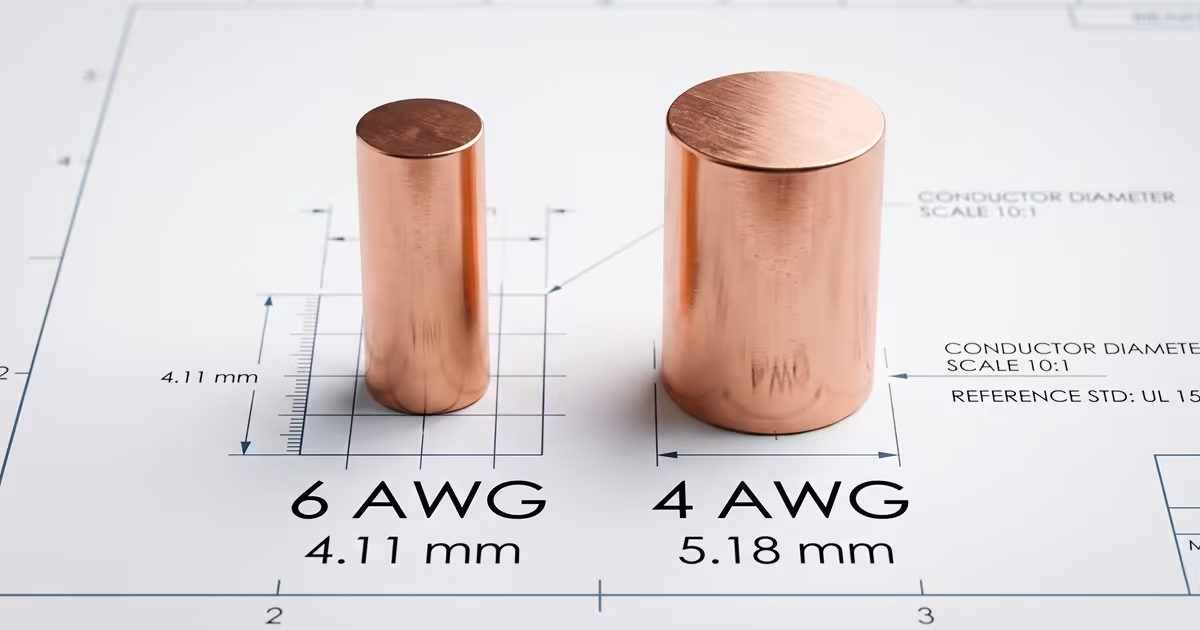
3. When Must You Upsize to 4 AWG?
A. Extreme Distances (Voltage Drop)
Even though 6 AWG THHN can safely carry 65 Amps without melting, pushing 48 Amps through it over a long trench run creates significant electrical resistance. This manifests as voltage drop. For example, a 125-foot run to a detached garage pushing 48 Amps over 6 AWG copper drops the voltage by roughly 2.1%. If that run extends past 175 feet, the drop exceeds the NEC’s recommended 3% threshold, and you must upsize to 4 AWG copper to prevent charging failures and terminal overheating.
B. High-Output 48A or 80A Chargers
If you are installing a hardwired 48A charger and are snaking wire through finished stud bays where installing conduit is impossible, you must use 4 AWG NM-B to satisfy the 60A breaker requirement. For massive 80A bidirectional home-backup chargers (like the Ford Charge Station Pro), you step far beyond the capabilities of 6 AWG and will generally require 3 AWG or 2 AWG copper.
C. Utilizing Aluminum Feeders
Because aluminum has a much higher resistance threshold than copper, it cannot carry as much current at the same diameter. If you choose to save money by running aluminum SER cable to a garage subpanel to feed your EV, you must dramatically upsize the gauge. A circuit that requires 6 AWG Copper will require at least 4 AWG (or often 2 AWG) Aluminum to achieve the equivalent continuous ampacity.
4. Conduit Fill & Terminal Lugs
Transitioning from 6 AWG to 4 AWG alters your physical installation parameters drastically. Under NEC Chapter 9 conduit fill rules, pulling three 6 AWG THHN conductors (two hots and one ground) comfortably fits inside 3/4-inch EMT or PVC conduit. However, stepping up to three 4 AWG THHN conductors requires you to upsize to a minimum of 1-inch conduit to prevent wire binding and jacket tearing during the pull.
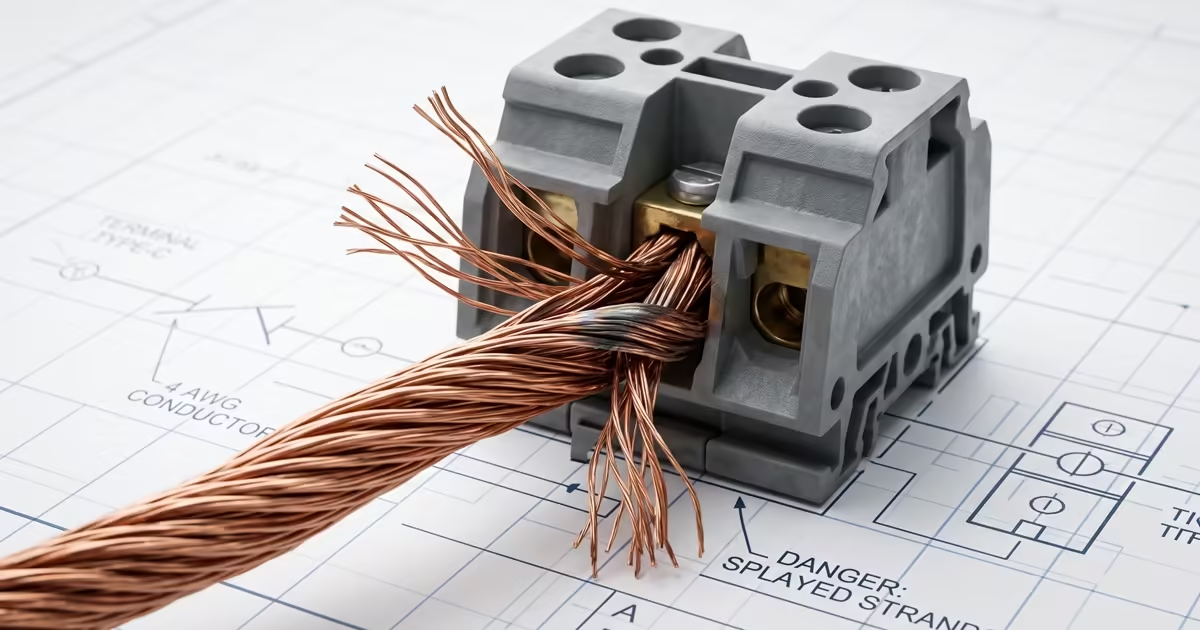
The Terminal Fitment Hazard
Always check your specific EV charger’s manual before purchasing massive 4 AWG wire. Many modern residential chargers (like certain ChargePoint and Tesla models) feature internal terminal blocks designed specifically for a maximum of 6 AWG wire. Attempting to shave off copper strands to force a thick 4 AWG wire into a 6 AWG terminal severely reduces the ampacity of the connection, creating massive electrical arcing and a direct fire hazard.
Frequently Asked Questions
Can I run a 48A charger on a 50A breaker with 6 AWG wire?
No. An EV charger is a continuous load. A 48A load requires a breaker sized at 125%, which equals exactly 60 Amps. Putting a 48A load on a 50A breaker violates the NEC and will cause the breaker to overheat, nuisance trip, and eventually suffer thermal degradation.
Is the ground wire also required to be 6 AWG or 4 AWG?
Per NEC Table 250.122, an equipment grounding conductor (EGC) for a 60A circuit only needs to be a minimum of 10 AWG Copper. You do not need to run a massive 6 AWG ground wire, though it is standard practice to buy pre-made NM-B cable assemblies (like 6/2 or 4/2) which include an appropriately upsized ground wire by default.
If my charger is a plug-in NEMA 14-50, do I need 4 AWG?
No. A NEMA 14-50 receptacle is installed on a 50-Amp breaker. Because 6 AWG NM-B Romex is rated for 55 Amps, it is perfectly safe and fully code-compliant for a 50-Amp circuit feeding a plug-in EV charger running at 40 Amps continuously.
Securing Your Heavy Gauge Charging Cables?
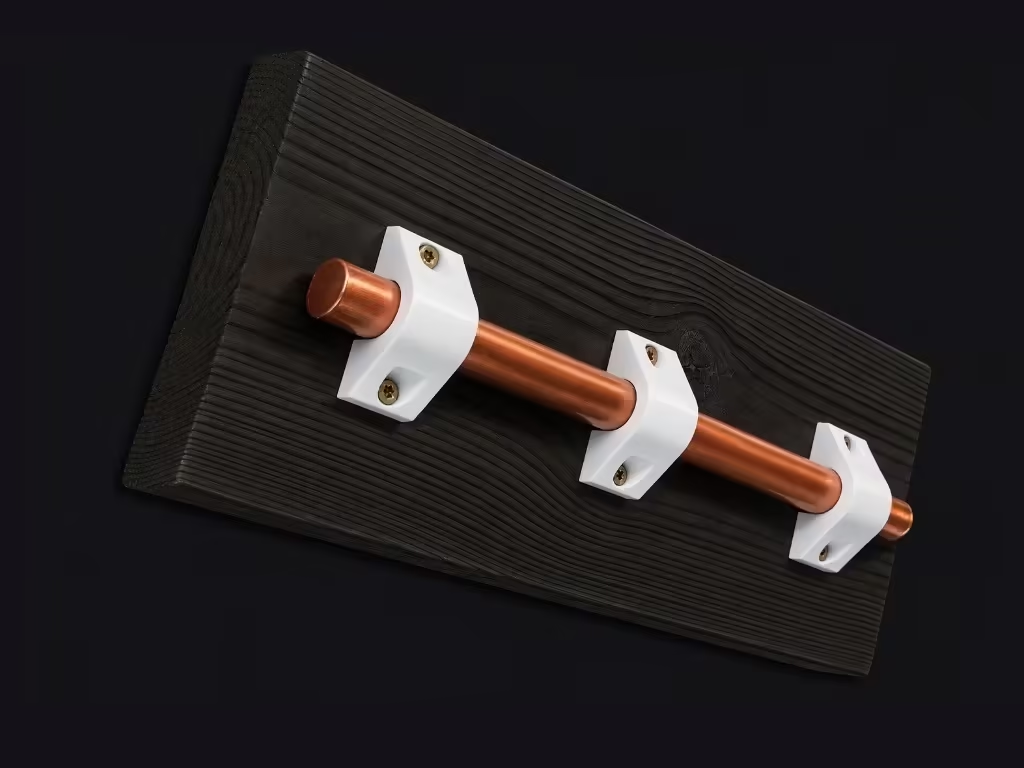
Whether you install 6 AWG or 4 AWG, your charging wand cord is heavy. Keep your garage neat and eliminate strain on your charger socket. Check out our heavy-duty EV cable organizer and holster bracket, engineered with a 12° drainage angle and 3D printed in UV-resistant PETG.