
Adding an EV Charger to a 100A Service: Load Calculations
As electric vehicles become standard, homeowners with older 100-amp electrical services frequently wonder if they can safely install a Level 2 charging station without paying thousands for a heavy-up service upgrade to a 200-amp panel. Because a 100-amp service provides a maximum capacity of 24 kW ($100text{A} times 240text{V}$), adding a high-amperage continuous load can push the main breaker past its thermal limit.
Before installing a charger, the National Electrical Code requires a formal load calculation. If the panel cannot support the load, you must utilize smaller EV charging equipment or rely on smart load-shedding technology to remain compliant.
Ready to Size Your Branch Circuit?
Once you determine your allowable amperage, calculate the exact wire gauge needed for your EVSE run.
In This Guide:
NEC Article 220 Part IV: The Optional Calculation
Before adding an EV circuit, you must perform a load calculation under NEC Article 220 Part IV. This formula evaluates your home’s total square footage lighting load, HVAC demands, and major appliances (dryers, water heaters) to determine your existing peak demand.
A maximum output 48A Level 2 charger draws 11.52 kW of continuous power. On a 100A service (which totals 24 kW of capacity), a single 48A charger consumes nearly half of the entire home’s available power. If your home has an electric range, electric dryer, and central air conditioning, adding an 11.52 kW continuous load will mathematically overload the 100A service, making a standard installation illegal.
NEC 625.42: Automated Load Management Systems (ALMS)
If your load calculation fails, you do not necessarily have to upgrade your panel. NEC 625.42 permits the use of an Automated Load Management System (ALMS).
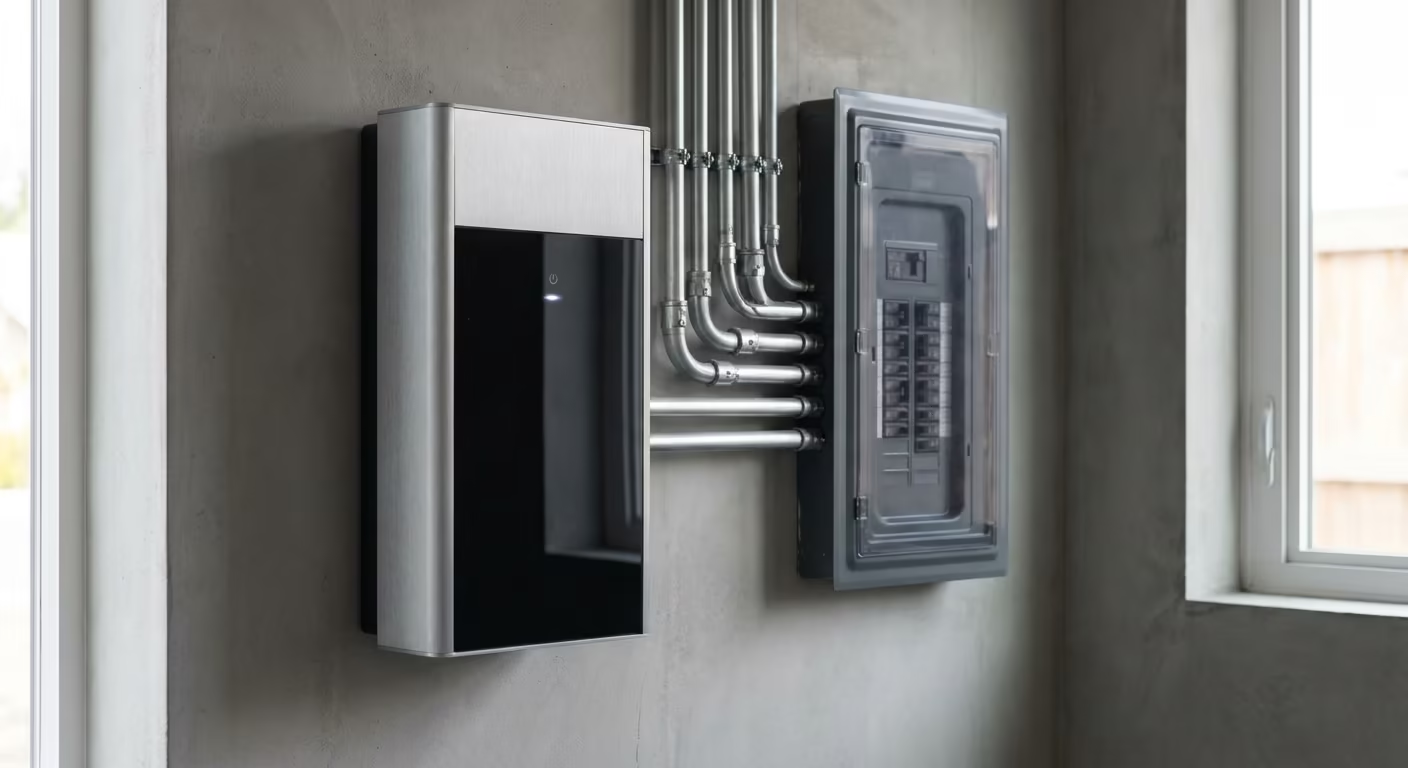
These smart devices monitor the total draw on the 100A main breaker in real time. If you turn on the AC and the electric oven simultaneously while the car is charging, the ALMS module temporarily shuts off power to the EV charger to prevent the main breaker from tripping.
Downsizing the Charger: 24A vs 32A vs 48A
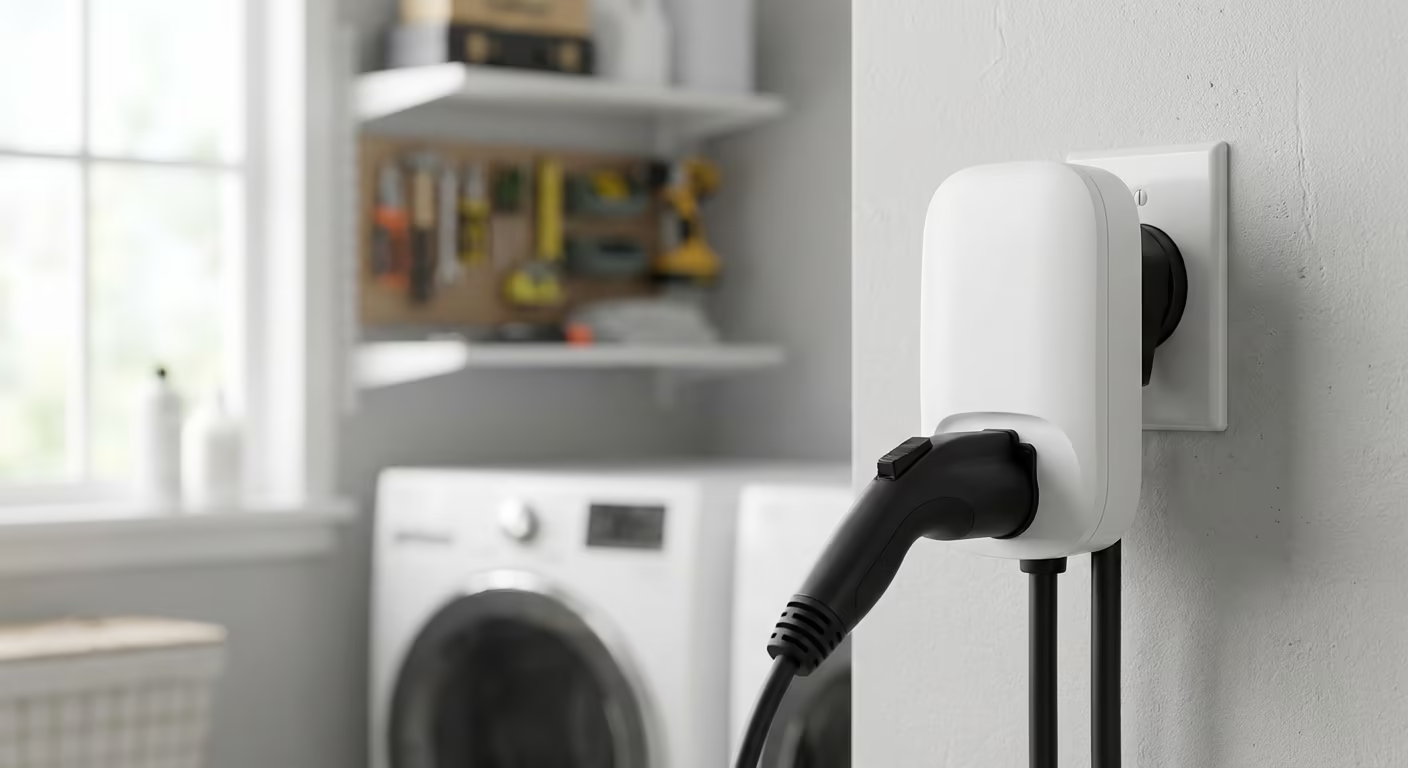
A simpler alternative to load shedding is permanently limiting the amperage output of your EVSE via its internal hardware switches or commissioning app.

- 48A Charger (60A Breaker): Requires ~48% of a 100A panel capacity. Seldom passes a load calc on 100A services.
- 32A Charger (40A Breaker): Draws 7.6 kW. A sensible middle ground that works for many homes with gas heating and gas appliances.
- 24A Charger (30A Breaker): Draws 5.7 kW. Easily passes most load calculations on a 100A service. Requires 10 AWG copper wire and still provides ~20 miles of range per hour of charge, which is more than adequate for overnight replenishment.
Frequently Asked Questions
Q: Can I share an electric dryer outlet with an EV charger?
A: Yes, using a UL-listed smart splitter. These devices plug into a 30A dryer outlet and route power to either the dryer or the EV, prioritizing the dryer to prevent overloads.
Q: Do I need a permit to add an EV charger to a 100A panel?
A: Yes. Local municipalities require a permit, inspection, and a documented NEC Article 220 load calculation to ensure the 100A service is not overloaded.
Securing Your Electrical Conduits & Cables?
Keep your electrical installations neat and code-compliant. Check out our parametric conduit clamps and cable organizers, custom-engineered and 3D printed in rugged industrial PETG.